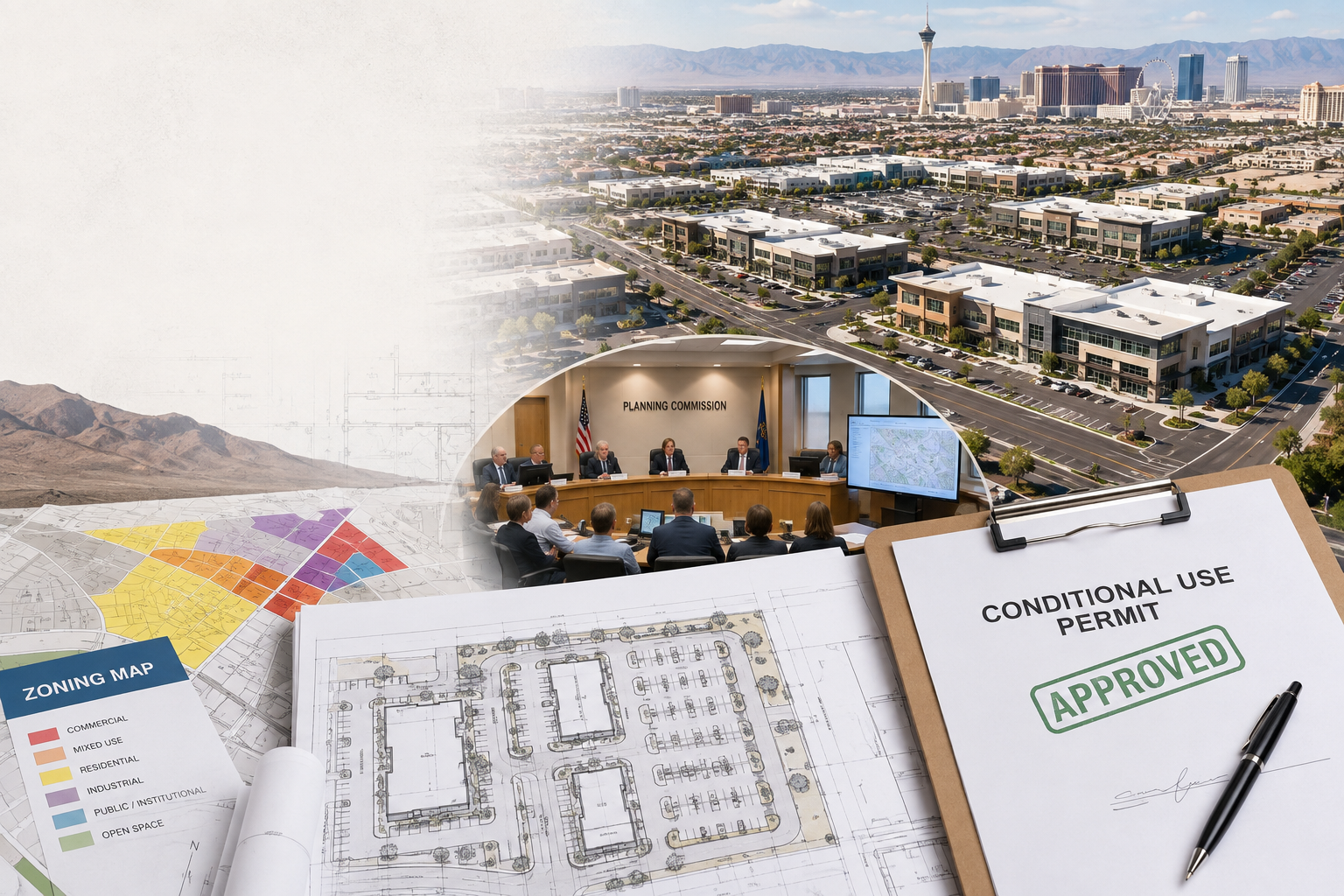
Nevada Conditional Use Permits Explained: A Complete Guide for Property Owners and Developers
If you’re planning to open a business, build a project, or use a property in Nevada in a way that isn’t automatically allowed under local zoning, you have probably come across the term conditional use permit (CUP). Understanding what a CUP is, when you need one, and how the approval process works can save you months of delays.
What Is a Conditional Use Permit?
A conditional use permit is a land-use approval that allows a property owner to utilize land or a building for a purpose that isn’t automatically permitted under the property’s zoning designation, but that local government has determined could be appropriate under the right conditions. Rather than banning a use outright or allowing it everywhere in a zoning district, a CUP lets planning staff or elected officials evaluate proposals and attach conditions, to reduce community impact.
Nevada’s Local Terminology Can Vary
Land use authority is delegated to counties and incorporated cities under Nevada Revised Statutes (NRS) Chapter 278, which means the exact name, process, and requirements differ depending on where your property is located.
- Clark County (unincorporated areas) – require a pre-application conference
- City of Las Vegas – refer to a CUP as a “special use permit” (SUP)
- Henderson, Reno, Sparks, and Washoe County -have differing CUP procedures
Because of this, the single most important first step is confirming which jurisdiction your property sits in and reviewing that specific agency’s land development code.
The General Conditional Use Permit Process in Nevada:
1. Pre-Application Review: A pre-application review allows you learn what is required, whether your proposed use is even eligible for a CUP in that zone, and what supporting studies might be needed.
2. Neighborhood or Community Meeting: Some jurisdictions require applicants to hold a public meeting with nearby property owners before formally applying, giving neighbors a chance to raise concerns early.
3. Formal Application Submittal: You will submit an application package, typically including a site plan, narrative describing the proposed use, ownership documentation, applicable fees, and any required technical studies.
4. Staff Review Planning: Staff review the application against the jurisdiction’s specific approval standards.
5. Public Notice and Hearing: Nearby property owners are notified, and a public hearing is then held before a planning commission, zoning administrator, or similar body.
6. Decision: The reviewing body can approve, approve with conditions, deny, or continue the application for more information.
7. Appeal Period: If denied, or if a neighbor disagrees with an approval, most Nevada jurisdictions allow an appeal to a higher body, within a specified window after the decision.
How Long Does It Take?
Timelines vary significantly by jurisdiction and project complexity, but applicants should generally plan for several weeks to a few months from a complete submittal to a final hearing decision.
Tips for a Smoother Approval
- Talk to planning staff early. A pre-application meeting can flag deal-breakers before you invest in a full application.
- Engage neighbors proactively. Addressing concerns before the public hearing reduces the odds of organized opposition.
- Submit a complete, professional package. Missing documentation is one of the most common causes of delay.
- Address the approval standards directly. Don’t just describe your project — explain specifically how it meets each standard the reviewing body must consider.
- Be realistic about conditions. Coming in with reasonable, workable conditions already proposed (like limited hours or landscaping) can speed approval.
Do You Need an Attorney or Land Use Consultant?
For straightforward projects, many applicants handle the process themselves working directly with planning staff. For larger developments, contested properties, or uses likely to draw opposition (like cannabis establishments, group homes, or nightlife venues), it’s common to bring in a land use attorney who knows the local code and hearing body well.
Lastly
The key to success is understanding your specific jurisdiction’s process, preparing a thorough application, and engaging with staff and neighbors early rather than treating the public hearing as your first line of defense. Because requirements differ across Clark County, Las Vegas, Henderson, Reno, and Nevada’s smaller counties, always verify current rules, fees, and submittal requirements with your local planning department before starting your application.
This article is for general informational purposes only and does not constitute legal advice. Zoning codes and procedures change, and requirements vary by jurisdiction, consult your local planning department or a land use attorney for guidance specific to your property.


