Nevada Series LLCs: The Complete Guide for Business Owners (2026)
If you own multiple properties, run several business ventures, or manage distinct assets under one umbrella, Nevada’s Series LLC may be one of the most powerful — and underutilized — business structures available to you. This guide breaks down everything you need to know about forming and operating a Series LLC in Nevada, including the governing statutes, filing requirements, liability protections, and which businesses stand to benefit the most.
What Is a Series LLC?
A Series LLC is a specialized form of limited-liability company that allows a single “master” or “parent” LLC to create multiple independent sub-units — called “series” — each of which can hold its own assets, have its own members, carry its own liabilities, and operate as a legally distinct entity. Think of it as a franchise model housed within one legal structure: one parent company with multiple self-contained divisions, each walled off from the others.
Nevada was among the first states in the nation to authorize Series LLCs, doing so in 2005 through Senate Bill 338 (Ch. 459, Statutes of Nevada 2005), which amended Chapter 86 of the Nevada Revised Statutes. The structure has since been refined through significant 2017 amendments that clarified how series are created and how they operate.
The Governing Law: NRS Chapter 86
The Nevada Series LLC is governed by Nevada Revised Statutes (NRS) Chapter 86 — Limited-Liability Companies. The most critical provisions are:
NRS 86.1255 — Defines “series” and “series of members” as synonymous terms referring to a limited-liability company whose creation has been authorized pursuant to subsection 2 of NRS 86.296 by a master LLC formed by filing articles of organization with the Secretary of State under NRS 86.151.
NRS 86.296 — The core operative statute. Subsection 2 authorizes the creation of series through the articles of organization or operating agreement. Subsection 3 establishes the critical liability shield: debts and obligations of a particular series are enforceable only against that series’s assets — not against the master LLC or any other series — provided that (a) separate and distinct records are maintained for each series with assets accounted for separately, and (b) the articles of organization or operating agreement expressly provides for this liability segregation.
NRS 86.161(1)(e) — Requires that if the master LLC is authorized to have one or more series of members, the articles of organization must include a statement to that effect.
NRS 86.236 — Governs the registered agent requirements for each series, enabling series to have their own registered agent for service of process.
NRS 86.311 — Addresses the acquisition, ownership, and disposition of property by both the company and its series.
NRS 86.151 — The general filing requirements that apply to the master LLC’s articles of organization.
A critical development came from the 2017 amendments (A 2017, 2780), which were enacted in part to resolve a 2017 Clark County District Court case (Grand Canal Shops v. AB Venetian, LLC, Case No. A-16-737610-C) that had questioned whether series LLCs created without filing separate articles of organization were legally valid entities. The 2017 amendments clarified beyond doubt that only the master LLC must file articles of organization with the Secretary of State — individual series do not need to file their own articles. This removed significant legal uncertainty that had previously surrounded the structure.
How a Series LLC Differs from a Standard
Understanding the Series LLC requires first understanding the standard Nevada LLC and where the two structures diverge.
Similarities to a Standard LLC:
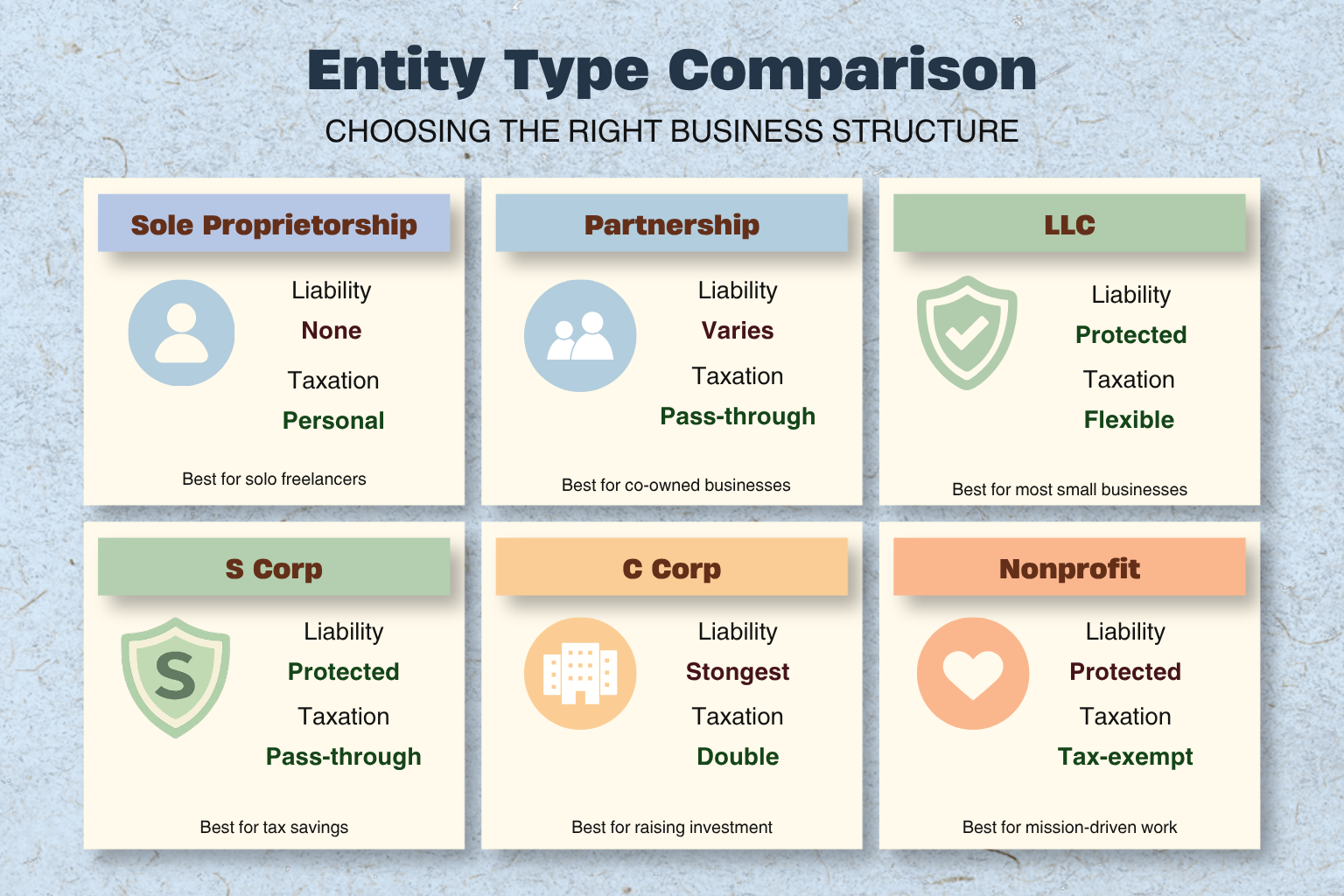
Both a standard LLC and a Series LLC (and each of its series) provide members with limited liability protection, meaning personal assets are generally shielded from business debts and obligations. They are governed by NRS Chapter 86, require a registered agent with a Nevada street address (NRS 86.231), must file an initial and annual list with the Secretary of State (NRS 86.263), and must maintain an operating agreement (NRS 86.286). Both may be member-managed or manager-managed, and both offer the same pass-through federal tax treatment by default.
Key Differences:
| Feature | Standard LLC | Series LLC |
| Number of liability “buckets” | One | One per series (potentially unlimited) |
| Separate filing per entity | N/A | Master LLC files; series do not file separately |
| Separate filing fees per entity | N/A | Only the master LLC pays initial/annual fees |
| Asset segregation | Not available | Available within a single legal framework |
| Operating agreement complexity | Straightforward | More complex; must address each series |
| Registered agent | One | Series may have their own (NRS 86.236) |
| Business license | One | Each series conducting business may need its own |
The most important distinction is structural: a standard LLC creates one liability pool for one business. A Series LLC creates multiple legally separated liability pools — each functioning like its own LLC — while being housed under a single master entity. This makes the Series LLC far more efficient for owners of multiple assets or ventures.
How a Nevada Series LLC Works
Here is a step-by-step overview of how the structure functions in practice.
Step 1 — Form the Master LLC. You file articles of organization with the Nevada Secretary of State for the master LLC under NRS 86.151. The articles must include a statement pursuant to NRS 86.161(1)(e) that the company is authorized to have one or more series of members.
Step 2 — Draft a Comprehensive Operating Agreement. Under NRS 86.296(3)(b), the operating agreement must expressly provide that each series’s debts and liabilities are enforceable only against that series’s assets. Without this provision, the liability shield between series may not hold. The operating agreement should also define each series, its purpose, its members, its management structure, and the rights and duties associated with it.
Step 3 — Create Each Series. Individual series are created internally — through authorization in the articles of organization or operating agreement — without filing separate articles with the Secretary of State. This was a major point clarified by the 2017 amendments.
Step 4 — Maintain Separate Records for Each Series. This is non-negotiable. NRS 86.296(3)(a) requires that separate and distinct records be maintained for each series, with assets held and accounted for separately from the master LLC and all other series. Commingling funds or records is the fastest way to destroy the liability wall between series.
Step 5 — Operate Each Series Independently. Each series can have its own bank accounts, contracts, members, and property. A series may own real estate, hold intellectual property, operate a business line, or serve any other lawful purpose. Under NRS 86.311, both the master LLC and each series may acquire, own, and dispose of property in their own names.
Asset Protection and Liability Segregation
The crown jewel of the Series LLC structure is internal liability segregation. Under NRS 86.296(3), so long as the statutory requirements are met, the debts, liabilities, obligations, and expenses of one series cannot reach the assets of another series or the master LLC. This means:
- A lawsuit against Series A cannot attach the assets held by Series B.
- A creditor of the master LLC cannot (with proper structuring) reach the assets of an individual series.
- Each series functions as its own liability firewall.
This is a dramatic enhancement over the standard LLC, which provides only one level of liability protection. Consider a real estate investor who owns ten rental properties. Using ten separate standard LLCs, they would pay ten sets of filing fees, maintain ten separate annual lists, and manage ten separate entities. With a Series LLC, they form one master LLC, create ten series internally, assign one property to each series, and maintain one set of annual state filings — while still enjoying the same liability isolation between properties.
Important Caveat: The liability shield between series has not been extensively tested in Nevada courts, and its recognition in other states — including states where the Series LLC concept does not exist — is not guaranteed. If a series conducts business in a non-series LLC state, the cross-series liability protection may not be respected by courts in that jurisdiction. This is one of the most important limitations to discuss with legal counsel.
Who Should Form a Series LLC?
The Nevada Series LLC is particularly well-suited for:
Real Estate Investors. This is the most common use case. An investor holding multiple properties can assign each property to its own series, insulating each asset from liability arising out of any other. A slip-and-fall at one property will not threaten the equity in another.
Franchise and Multi-Location Business Owners. Owners of restaurant chains, retail outlets, or service businesses operating under one brand across multiple locations can organize each location as its own series, limiting cross-location liability exposure.
Venture Capitalists and Investment Fund Managers. A fund manager running multiple investment vehicles or asset classes can organize each fund or asset class within a series, providing clean liability separation and simplified management.
Holding Companies. Business owners who hold multiple operating businesses under a single umbrella entity can use the Series LLC to separate each operating business into its own protected series.
Entrepreneurs with Multiple Business Lines. If you run a consulting firm, an e-commerce business, and a rental property portfolio, a Series LLC lets you compartmentalize each venture without forming three separate LLCs and paying three sets of fees.
IP Holders and Licensors. Companies that own multiple intellectual property assets — patents, trademarks, or copyrights — can isolate each asset in its own series, shielding high-value IP from liabilities arising out of operations in other series.
Filing and Licensing Requirements
For the Master LLC
Articles of Organization (NRS 86.151 and 86.161): File with the Nevada Secretary of State. The articles must include the names and addresses of organizers and initial managers or members, the name and address of the registered agent, and — critically — a statement under NRS 86.161(1)(e) that the company is authorized to have one or more series of members.
Initial List of Managers/Members (NRS 86.263): Filed simultaneously with the articles of organization. Must include the names and titles of all managers or managing members and their addresses.
State Business License: Nevada requires all LLCs to obtain a state business license, renewable annually.
Annual List (NRS 86.263): Filed annually with the Secretary of State. As of current Nevada fee schedules, the annual list fee is $150, with a $75 late fee if not timely filed. The annual list is due on the last day of the anniversary month of formation.
Registered Agent (NRS 86.231): The master LLC must maintain a registered agent in Nevada with a physical street address.
For Each Series
No Separate Articles of Organization Required: As clarified by the 2017 amendments, individual series do not file their own articles of organization with the Secretary of State. The series is created internally through the master LLC’s articles or operating agreement.
Registered Agent for Each Series (NRS 86.236): Each series may — and in practice should — have its own registered agent designated for service of process. This protects the privacy and independence of each series.
Fictitious Name/DBA Registration (NRS 602.010): Under NRS 602.010 and the 2017 amendments, a series conducting business under a name that does not clearly indicate it is a series of the master LLC may be deemed to be doing business under a fictitious or assumed name. In that case, the series must file a fictitious firm name certificate (DBA) with the county clerk of each county where it does business.
Business Licenses for Each Series: If a series conducts regulated activity — such as operating a bar, a contractor business, or a cannabis dispensary — it must obtain the applicable local and state occupational or professional licenses in its own name. Each series conducting distinct licensed business activities will generally need its own license for those activities.
Separate Bank Accounts: While not a statutory filing requirement, maintaining a dedicated bank account for each series is effectively mandatory to satisfy the NRS 86.296(3)(a) requirement of separate and distinct records. Commingling defeats the liability shield.
Operating Agreement Provisions: The operating agreement must expressly address each series, including its purpose, members, management structure, and the liability segregation language required by NRS 86.296(3)(b).
Key Limitations and Considerations
No business structure is without drawbacks. Before forming a Series LLC, be aware of these limitations:
Interstate Recognition Uncertainty. Not all states recognize Series LLCs. If your series conducts business in a state that does not have Series LLC statutes, courts there may not respect the liability wall between series. This is especially relevant for businesses with a multi-state footprint.
Untested in Nevada Courts. While NRS 86.296 provides a clear statutory framework, Nevada case law on Series LLCs remains relatively sparse. The full scope of cross-series protection has not been comprehensively litigated.
No Federal Tax Classification for Individual Series. The IRS has not issued final regulations on how individual series within a Series LLC are treated for federal tax purposes. While proposed regulations have suggested treating each series as a separate entity for tax purposes, this remains an area of evolving guidance. Consult a CPA or tax attorney.
Bankruptcy Uncertainty. Federal bankruptcy courts have not uniformly ruled on whether a bankruptcy filing by the master LLC automatically includes all series, or whether a series can file independently. This is a significant risk for businesses where financial distress is possible.
Administrative Complexity. Maintaining strict separation of records, accounts, and operations for each series requires diligent bookkeeping and administration. Failure to maintain this separation can collapse the liability protection.
Professional License Restrictions. Some licensed professions in Nevada — such as accountants and certain engineers — face restrictions on how their business entities can be named and structured. The Secretary of State will not accept articles of organization containing words like “accountant” or “accounting” without certification from the Nevada State Board of Accountancy (NRS 86.171).
Top Reasons to Form a Series LLC in Nevada
Cost Efficiency at Scale.
The original legislative intent behind the 2005 Series LLC authorization was explicitly to let owners of multiple assets enjoy separate liability protection without paying organizational and annual fees for multiple LLCs. One master LLC means one set of state filing fees for the umbrella entity.
Superior Asset Protection Architecture.
For multi-asset owners, the liability segregation available under NRS 86.296(3) provides a level of internal asset protection that a single standard LLC cannot offer. Each series is its own liability firewall.
Nevada’s Business-Friendly Legal Environment.
Nevada is known for its strong LLC protections, business-friendly courts, and absence of a state corporate income tax. Nevada courts have a history of respecting business entity separateness when properly maintained, making it an attractive jurisdiction for entity formation.
Flexible Management and Membership.
Each series can have different members and different management structures from the master LLC and from each other. One investor may be a member of Series A only; another may participate in multiple series. This allows for complex joint venture and co-investment arrangements within one legal umbrella.
Simplified Governance.
Rather than managing board meetings, operating agreements, and registered agent appointments for ten separate LLCs, a Series LLC owner manages one master operating agreement (with series-specific provisions) and one registered agent for the master entity — while still achieving the liability separation of ten distinct companies.
Privacy.
Nevada does not impose a personal income tax and has significant privacy protections for LLC members. Using a Series LLC further reduces the number of public filings, since individual series do not file their own articles of organization.
Scalability.
A Series LLC can grow with your portfolio. Adding a new series for a new property, business line, or investment does not require a trip to the Secretary of State or payment of a new filing fee. The master LLC’s existing authorization simply extends to the new series through the operating agreement.
Centralized Administration with Decentralized Liability.
A Series LLC lets you keep management centralized — one accountant, one law firm, one registered agent — while keeping liability decentralized across multiple protected series.
Final Thoughts
Nevada’s Series LLC is one of the most sophisticated and efficient business structures available for entrepreneurs, investors, and multi-venture operators. The statutory framework under NRS Chapter 86 — particularly NRS 86.296 and NRS 86.1255 — provides a robust foundation for internal asset segregation, flexible management, and scalable growth, all under one master entity.
That said, the structure demands careful drafting, disciplined record keeping, and ongoing compliance to maintain the liability walls between series. The statutory protections are only as strong as the administrative practices behind them.
If you are considering a Nevada Series LLC, your first call should be to a Nevada-licensed business attorney who can help you draft a comprehensive operating agreement, establish proper record-keeping systems for each series, and assess whether the structure is appropriate for your specific business goals and operational footprint.
This blog post is provided for general informational purposes only. It does not constitute legal advice and does not create an attorney-client relationship. Laws may change; always verify current statutes and consult a licensed professional before making legal or business decisions.
Disclaimer: This article is for informational purposes only and does not constitute legal advice. You should consult a licensed Nevada attorney before forming any business entity.