S-Corporations Explained: Benefits, Tax Rules, and How to Become One
What Is an S-Corporation?
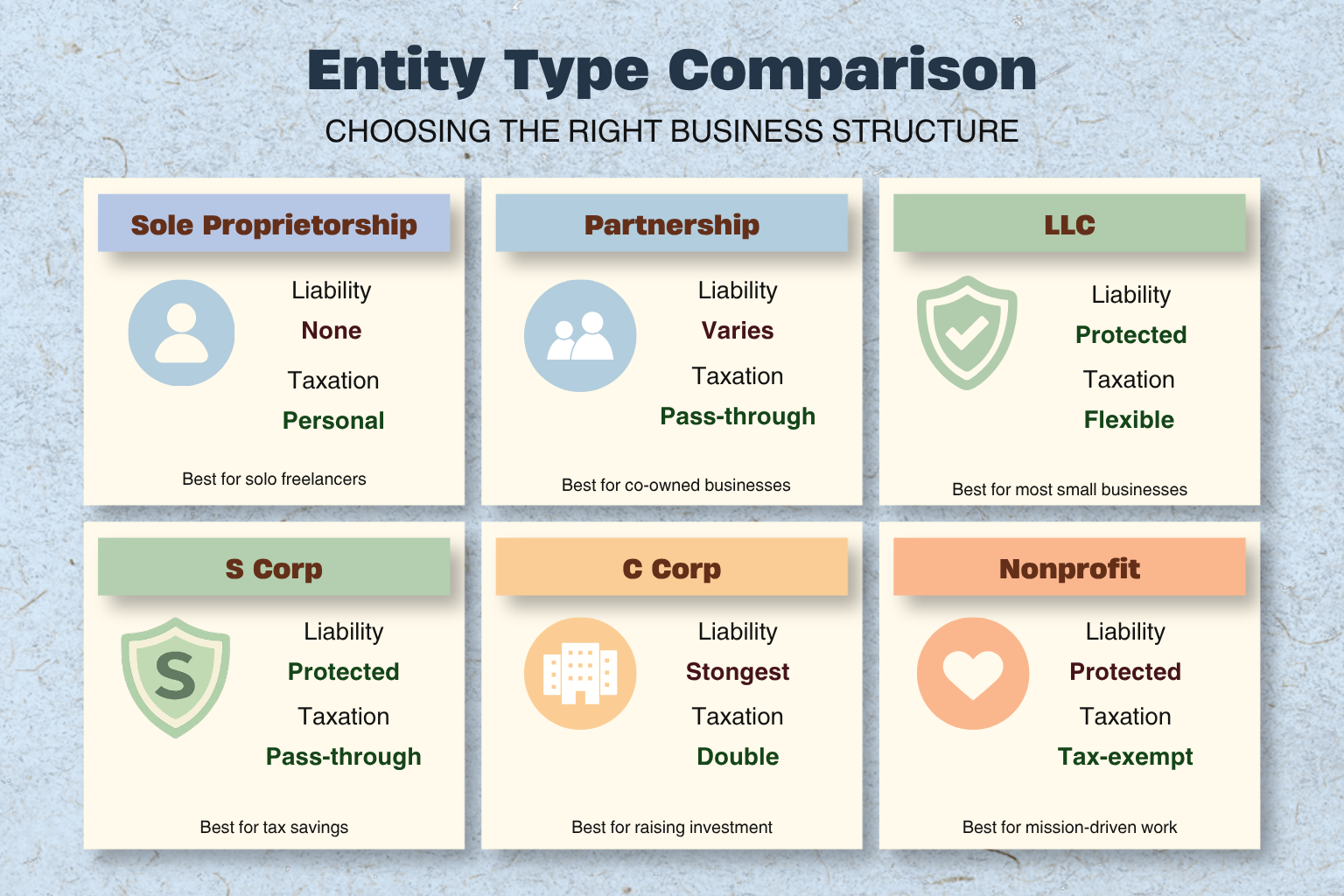
An S-corporation (S-corp) is a tax designation that allows eligible businesses to pass corporate income, losses, deductions, and credits directly to members or shareholders for federal tax purposes. Unlike traditional corporations, S-corps generally avoid double taxation while still offering liability protection. S-corps are not a separate entity, it is a tax designation that other entity structures such as limited liability companies (LLCs) or C-corporations make.
For many small business owners, entrepreneurs, consultants, and professional service firms, an S-corporation can provide significant tax advantages and operational flexibility, but it is not right for everyone and it is important to understand the structure and the risks.
Whether you are launching a startup, restructuring an LLC, or evaluating tax strategies for an existing company, understanding how S-corporations work is essential.
How Does an S-Corporation Work?
An S-corporation is not a separate business entity itself. Instead, it is a tax election made with the IRS by an eligible corporation or LLC.
Businesses that qualify can elect S-corp status by filing Form 2553 with the IRS.
If approved:
- Business profits and losses “pass through” to shareholders or members
- Shareholders or members report income on their personal tax returns
- The business generally does not pay federal corporate income tax
- Owners may reduce self-employment tax liability through salary distributions
This structure combines aspects of corporations and pass-through entities like partnerships and LLCs.
Key Benefits of an S-Corporation
Pass-Through Taxation
One of the biggest advantages of an S-corporation is avoiding double taxation.
In a traditional C-corporation:
- The corporation pays taxes on profits
- Shareholders pay taxes (again) on dividends
With an S-corp:
- Income passes directly to shareholders (or members)
- Taxes are generally paid only once at the individual level
This can create meaningful tax savings for small business owners, but it is not always guaranteed.
Potential Self-Employment Tax Savings
There are several requirements for S-corps and failing to follow the requirements can result in the company paying higher taxes than expected. For instance, S-corp owners who actively work in the business are considered employees and must receive a reasonable salary.
After paying that salary, generally:
- Remaining profits may be distributed as dividends
- Dividend distributions are generally not subject to self-employment taxes
This tax treatment is one reason some businesses elect S-corp status, if the structure makes sense for them.
Limited Liability Protection
Like corporations and LLCs, S-corporations usually provide liability protection for owners.
This means shareholders or members are generally not personally responsible for:
- Business debts
- Lawsuits
- Contract obligations
However, liability protection depends on maintaining proper corporate formalities and separating personal and business finances. And failing to follow the formalities and requirements can result in loss of liability protection and higher taxes for the company. Thus, it is critical to discuss with advisors to determine if the structure is right for your business.
S-Corporation Requirements
Not every business qualifies for S-corp taxation. The IRS imposes several eligibility requirements such as:
- Be a domestic corporation or eligible LLC
- Have no more than 100 shareholders or members
- Have only allowable shareholders or members
- Issue only one class of stock
- Obtain shareholder or member consent for the election
Because eligibility rules can be complex, businesses should consult legal and tax professionals before filing.
S-Corp vs LLC: What’s the Difference?
Many business owners compare LLCs and S-corporations when choosing a structure.
LLC
An LLC is a legal entity that generally offers:
- Flexible management
- Pass-through taxation by default
- Fewer corporate formalities
LLCs can also elect S-corp taxation if eligible.
S-Corp
An S-corp is a tax election that may offer:
- Potential payroll tax savings
- Structured ownership requirements
- Increased administrative obligations
For many small businesses, the choice comes down to tax strategy, growth goals, and operational preferences.
S-Corporation Disadvantages
Although S-corps offer advantages, they are not ideal for every business.
More Administrative Requirements
S-corporations often require:
- Payroll processing
- Corporate meetings
- Recordkeeping
- Ongoing compliance filings
Failure to follow requirements may jeopardize liability protection or tax status.
Salary Requirements
The IRS requires shareholder-employees to receive “reasonable compensation.”
If owners pay themselves artificially low salaries to avoid payroll taxes, the IRS may impose:
- Penalties
- Back taxes
- Interest
Understanding the requirements and proper payroll planning is critical.
There are additional restrictions on s-corps that may limit certain business opportunities so it is important to consult with professionals to determine if the tax election is right for your business.
How to Form an S-Corporation
Step 1: Choose a Business Structure
Most businesses first form either:
- A corporation
- An LLC
Formation requirements vary by state.
Step 2: File Formation Documents
Businesses typically file:
- Articles of Incorporation
- Articles of Organization (for LLCs)
State filing fees and compliance obligations apply.
Step 3: Obtain an EIN
An Employer Identification Number (EIN) is required for:
- Taxes
- Payroll
- Banking
- Hiring employees
Step 4: File IRS Form 2553
Eligible businesses elect S-corp taxation by filing Form 2553 with the IRS.
Timing matters. Missing deadlines can delay S-corp treatment.
Step 5: Maintain Compliance
After formation, businesses must:
- Maintain records
- File annual reports
- Run payroll properly
- File tax returns
Working with an attorney and CPA can help reduce compliance risks.
Is an S-Corporation Right for Your Business?
An S-corporation may be beneficial if:
- Your business generates consistent profits
- You want potential tax savings
- You plan to pay yourself a salary
- You want liability protection
However, businesses seeking venture capital, multiple stock classes, or foreign investors may prefer other structures.
The best choice depends on your:
- Revenue
- Growth strategy
- Ownership structure
- Tax goals
- Industry
Working with professionals such as an attorney and CPA will help businesses determine if an s-corporation is right for them.
Final Thoughts on S-Corporations
S-corporations remain one of the most popular structures for small and midsize businesses because they combine liability protection with pass-through taxation.
When structured correctly, an S-corp can help business owners:
- Reduce tax exposure
- Protect personal assets
- Improve operational credibility
- Support long-term business growth
Before electing S-corp status, business owners should evaluate both the benefits and compliance obligations with qualified legal and tax advisors.